

Google Ads is phasing out call ads in favor of responsive search ads, a move designed to simplify ad creation and management while introducing new features and capabilities. This transition is expected to be completed early next year.
Key Changes and Implications:
- New Call Ads Require Landing Pages: All newly created call ads will need to be linked to a specific landing page. This requirement aligns with Google’s goal of providing a seamless user experience and ensuring that users have a clear destination after clicking on an ad.
- Existing Call Ads Without URLs Won’t Migrate Automatically: Call ads without a final URL will not be automatically converted to responsive search ads. Advertisers will need to manually update these ads or create new responsive search ads to maintain their ad campaigns. This change emphasizes the importance of having a well-defined landing page strategy to maximize the effectiveness of ad campaigns.
- Call Ads Designed for Phone Calls: Call ads are specifically designed to encourage users to call businesses directly from their devices. However, with the transition to responsive search ads, advertisers will have more flexibility to include various call-to-action options, such as phone calls, website visits, or app downloads. This shift reflects the evolving preferences of users and the increasing diversity of devices and platforms used to access online content.
Why the Change?
Google’s decision to sunset call ads is driven by several factors:
- Increasing Popularity of Responsive Search Ads: Responsive search ads have gained significant popularity among advertisers due to their flexibility, automation, and ability to adapt to different screen sizes and devices.
- Evolving User Behavior: User behavior is constantly evolving, and users are increasingly using their mobile devices to search for information and make purchases. Responsive search ads are well-suited to meet the needs of these mobile-first users.
- Need for Advertisers to Adapt: To stay competitive in the evolving digital advertising landscape, advertisers need to embrace new technologies and tools. Responsive search ads offer a more efficient and effective way to reach target audiences and drive conversions.
What Advertisers Need to Do:
Advertisers who currently rely on call ads should take the following steps to prepare for the transition to responsive search ads:
- Update Existing Call Ads: Add a final URL to existing call ads to ensure a smooth migration process. This will help maintain the visibility and performance of these ads during the transition period.
- Create New Responsive Search Ads: Start creating new responsive search ads to replace existing call ads or to launch new campaigns. By taking advantage of the features and benefits of responsive search ads, advertisers can create more engaging and effective ad campaigns.
- Leverage Responsive Search Ad Features: Take advantage of the various features offered by responsive search ads, such as multiple headlines and descriptions, to create more engaging and effective ads. By testing different variations and optimizing their campaigns, advertisers can improve their overall performance and achieve better results.
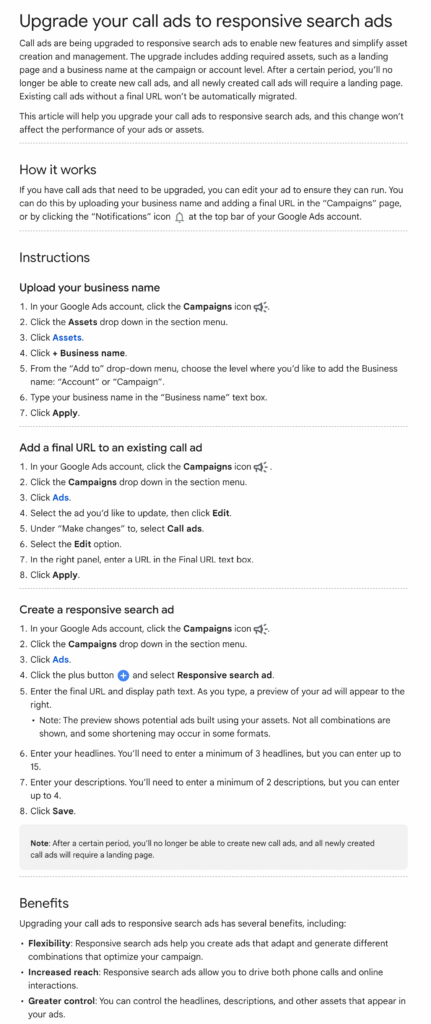
Google has a detailed help document on this change over here – here is a screenshot of it:
By staying informed and taking proactive steps, advertisers can successfully navigate this transition and continue to drive conversions and growth through Google Ads.